Cormorán Orejudo
Nannopterum auritum
- En inglés
- Double-crested Cormorant
- Orden
- Suliformes
- Familia
- Phalacrocoracidae
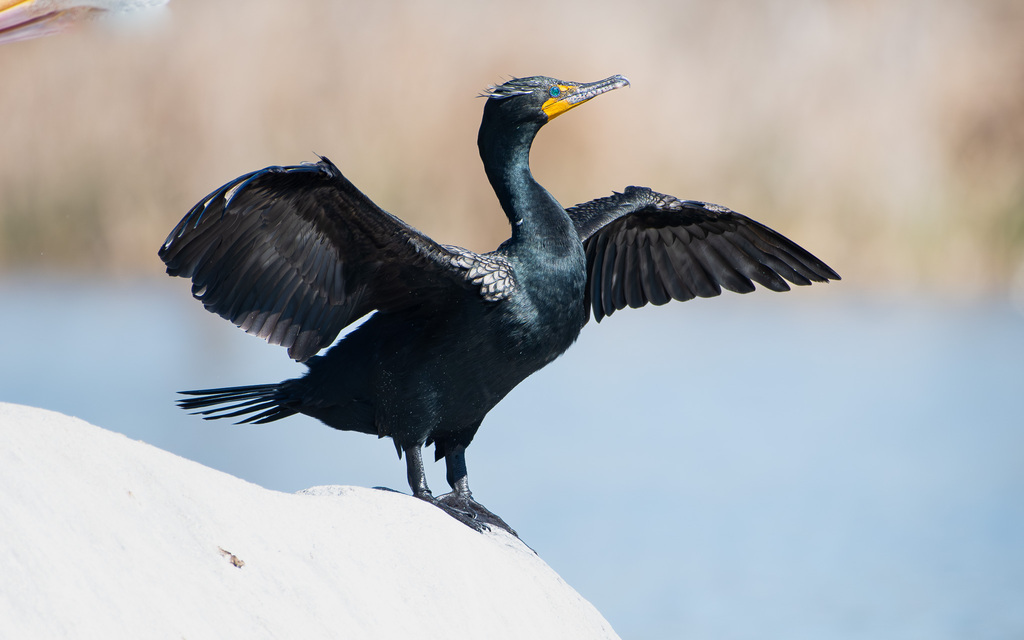
Fotografía: Ben Martin Mortimer
Cantos y llamados
3 grabaciones de campo de Cormorán Orejudo, aportadas por la comunidad de iNaturalist.
Clasificación
- Orden
- Suliformes
- Familia
- CormoranesPhalacrocoracidae
- Código eBird
- doccor
- Observaciones en iNaturalist
- 206.421
Ver en otras bases
Cuándo se ve
3 registros en Colombia repartidos por mes.
Ojo: con solo 3 registros en total, la forma de la curva puede ser casualidad y no un patrón real.
Dónde se ha registrado
3 registros en Colombia, repartidos en 1 departamento.
- San Andrés Providencia y Santa Catalina3
Fuente: GBIF, que agrega registros de eBird, iNaturalist y colecciones científicas. Los recuentos reflejan dónde se ha observado, no solo dónde vive: los departamentos con más pajareros aparecen sobrerrepresentados.
Qué ave es
The double-crested cormorant is a member of the cormorant family of water birds. It is found near rivers and lakes and in coastal areas and is widely distributed across North America, from the Aleutian Islands in Alaska down to Florida and Mexico. Measuring 70–90 cm (28–35 in) in length, it is entirely black except for a bare patch of orange-yellow facial skin and some extra plumage that it exhibits in the breeding season when it grows a double crest in which black feathers are mingled with white. Five subspecies are recognized. It mainly eats fish and hunts by swimming and diving. Its feathers, like all cormorants, are not waterproof, and it must dry them out after spending time in the water. Once threatened by the use of DDT, the numbers of this bird have increased markedly in recent years.
Resumen traducido del artículo en inglés de Wikipedia, porque esta especie todavía no tiene artículo en español. Leer el artículo completo
Galería
9 fotografías, todas con licencia abierta.
Con cuáles se puede confundir
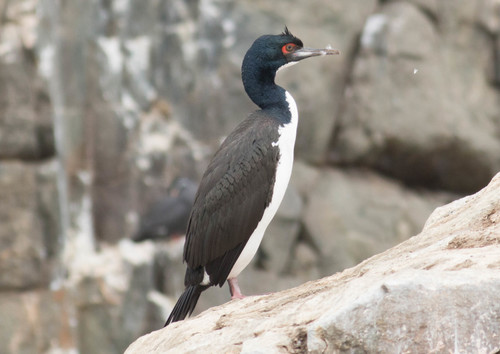
Otras Cormoranes de Colombia. Las del mismo género van primero, que son las que más cuesta separar en campo.
Especie 533 de 1996, en orden taxonómico